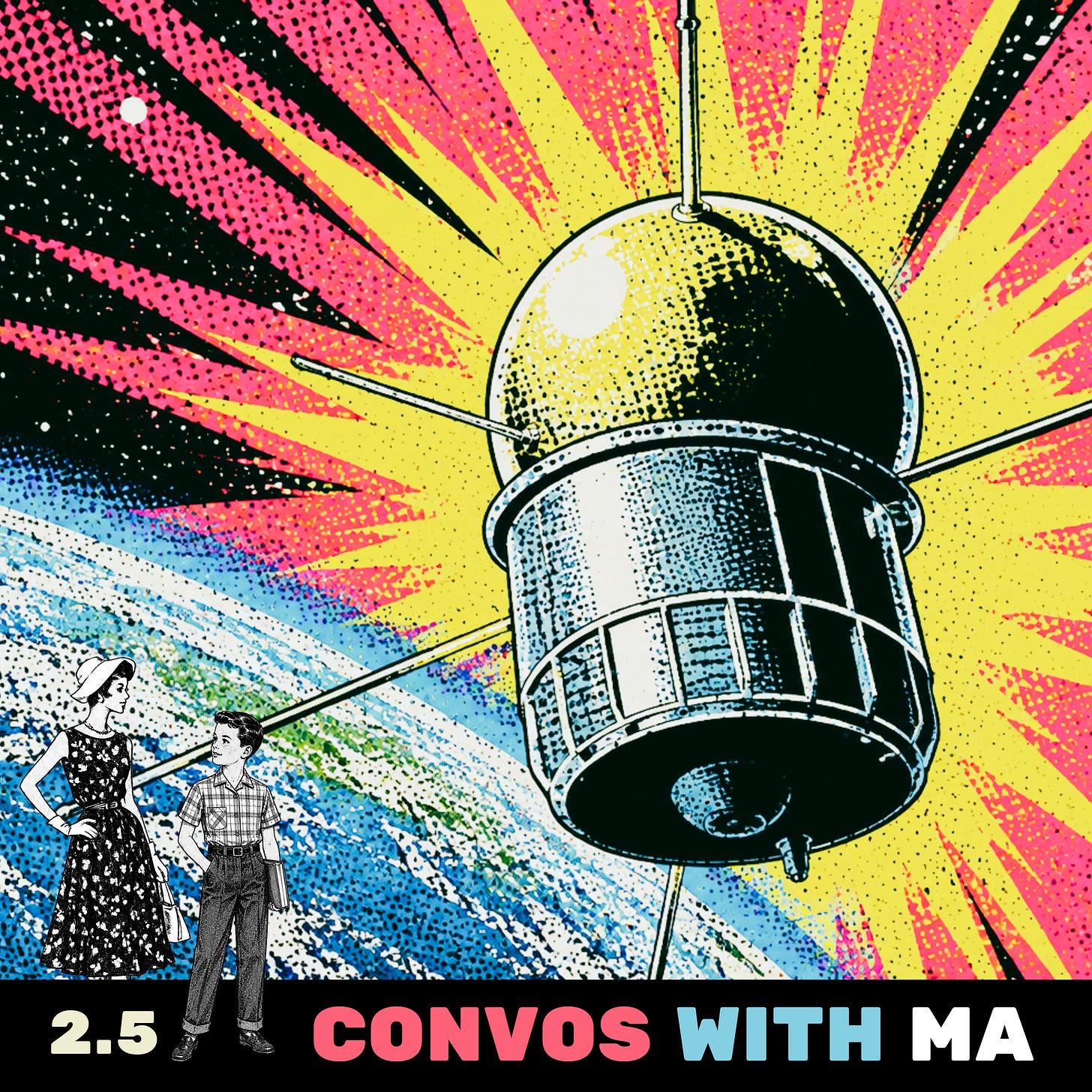
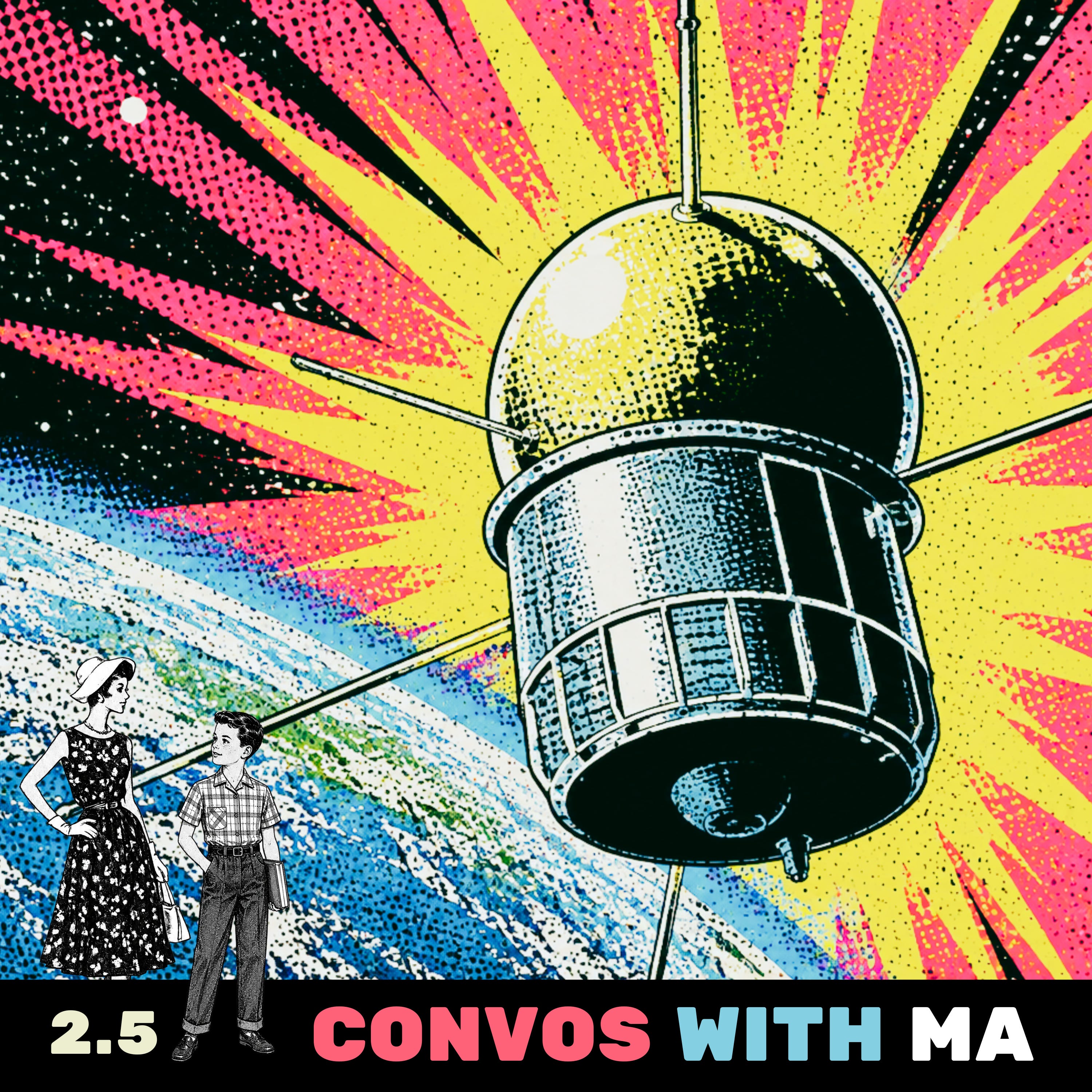
We talk some shit about this grapefruit sized piece of metal and how it allowed the pocket protector people of the world to slowly take over society. Here are the ten segments of today’s show.
1. The Launch That Happened in the Shadow of Sputnik
What happened:
Explorer 6 launched from Cape Canaveral as an American scientific satellite designed to study space and Earth. It was small, but it represented something much bigger: America trying to catch up in the Space Race.
Context to understand:
The Soviet Union shocked the world in 1957 when it launched Sputnik, the first artificial satellite. Americans were not just impressed; many were terrified. If the Soviets could launch a satellite, could they also launch nuclear weapons farther and faster?
Discussion ideas:
Why did a metal ball with a radio transmitter create such panic?
Was the Space Race really about science, or was it about national pride and military power?
Why did Americans suddenly view space as a battlefield?
2. Why Didn’t the Military Run the Space Program?
The question:
If rockets were connected to missiles and national security, why did the United States create NASA, a civilian agency?
Context to understand:
Before NASA existed, different branches of the military were competing in space research. The Army, Navy, and Air Force all had their own projects. After Sputnik, President Eisenhower decided America needed a coordinated effort.
NASA was created in 1958 as a civilian organization focused on exploration and science, while the military continued developing space technology for defense.
Discussion ideas:
Was NASA created to keep space from becoming only a weapons race?
Was it a public relations move to show America was exploring peacefully?
Is space exploration ever truly separate from military interests?
3. The Cold War Wasn’t Just Political: Americans Really Hated the Soviets
What happened:
The Space Race took place during an era of intense distrust between the United States and Soviet Union.
Context to understand:
Many Americans viewed communism as a direct threat to democracy and freedom. The Soviet Union was not just a rival country; it represented an opposing ideology. This created fear, suspicion, and sometimes extreme reactions.
Discussion ideas:
How much of the Space Race was fueled by genuine scientific curiosity versus fear?
Why did beating the Soviets become a national obsession?
How did propaganda shape how Americans viewed space achievements?
4. The Strange Reality: In 1959, We Barely Understood Our Own Planet
The question:
How could humans launch satellites but still not fully understand Earth?
Context to understand:
Before satellites, scientists had limited ways to study Earth as a complete system. Weather observations came mostly from ground stations, ships, and airplanes. Scientists knew about storms, oceans, and atmosphere, but they lacked a global view.
Explorer 6 helped change that by looking down at Earth from orbit.
Discussion ideas:
What did we not know about weather patterns before satellites?
How can seeing the whole planet change scientific thinking?
Why did humanity need to leave Earth to better understand Earth?
5. The First Glimpse of Earth From Above
What happened:
Explorer 6 carried a primitive television scanner that helped create one of the earliest images of Earth from space.
Context to understand:
The image was not the beautiful “Blue Marble” photograph people know today. It was grainy and crude. But the concept was revolutionary: humans could finally see their entire planet from the outside.
Discussion ideas:
Why are images of Earth from space so emotionally powerful?
Did these images help create modern environmental awareness?
Does seeing Earth as one object change how we think about borders and nations?
6. The Invisible Dangers Above Us: Cosmic Rays and Radiation
What happened:
Explorer 6 studied cosmic rays and Earth’s magnetic environment.
Context to understand:
Space is not empty. It is filled with radiation and particles that can damage equipment and threaten astronauts. Earth’s magnetic field acts like a protective shield.
Discussion ideas:
How much did scientists actually know about space dangers in 1959?
Why did early astronauts essentially become test subjects?
Are humans naturally built for space?
7. Satellites Changed Everything: Weather, Communication, and Daily Life
What happened:
Explorer 6 helped prove that satellites could be useful scientific tools.
Context to understand:
Today, satellites help with weather forecasts, GPS, television, internet communication, agriculture, and disaster tracking. In 1959, none of this existed.
Discussion ideas:
Could modern society function without satellites?
Do people underestimate how dependent we are on space technology?
Was the satellite revolution one of the biggest technological changes in human history?
8. The Dark Side of Space: Are We Filling Orbit With Junk?
The question:
Can humans actually ruin space?
Context to understand:
Thousands of satellites now orbit Earth, along with countless pieces of debris from old rockets and broken equipment. Scientists worry about a possible “Kessler Syndrome,” where collisions create more debris, which creates more collisions.
Discussion ideas:
Are we repeating our environmental mistakes in space?
Who owns space, and who is responsible for cleaning it up?
Could humanity eventually make parts of orbit unusable?
9. The Space Race Created a Technological Explosion
What happened:
The competition with the Soviet Union pushed enormous investment into science and engineering.
Context to understand:
The Space Race helped accelerate advances in computers, materials, communications, and engineering.
Discussion ideas:
Was spending billions on space worth it?
Do expensive government projects create unexpected benefits?
Would technology have advanced as quickly without the Cold War?
10. Explorer 6 and the Moment Humanity Started Looking Back at Itself
The bigger question:
Explorer 6 was not a Moon landing. It was not a famous astronaut mission. Why does it matter?
Context to understand:
It represented a major change: humans were no longer trapped on the surface of Earth. We had begun observing our planet from outside.
Discussion ideas:
Did space exploration make humanity more united or more divided?
Is exploring space a luxury or part of human nature?
If we can see Earth as a fragile object floating in darkness, should that change how we treat it?